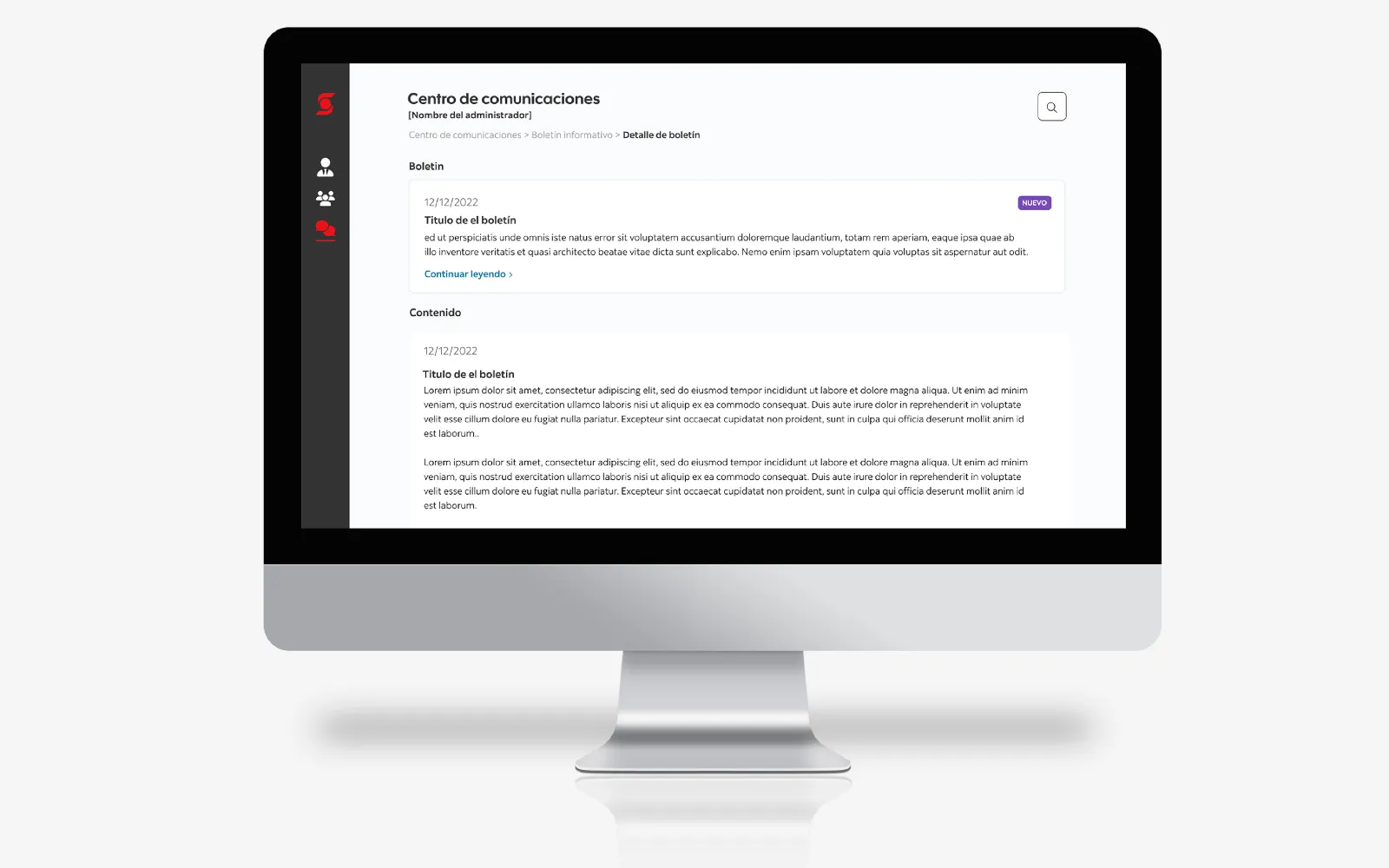
Communication Center — Internal Communication Management
Designed a centralized communication platform for Scotia Connect that enabled enterprise teams to create, manage, approve, and distribute platform-wide messages through structured communication workflows across multiple markets.

CO · US
Project Context
Communication Center was designed as a centralized internal communication module within
Scotia Connect. The platform allowed enterprise teams to manage communication across different
user types, markets, and operational scenarios through a unified system. Instead of relying on
fragmented communication methods, the platform introduced structured workflows for creating,
approving, publishing, and managing messages directly inside the Scotia Connect ecosystem. The
solution supported both informative communication and high-visibility alerts while maintaining
consistency with Scotia Connect’s global platform standards.
Design Focus
• Internal communication workflows
• Role-based permissions
• Message approval systems
• Newsletter management
• Pop-up communication
• Intrusive messaging
• Cross-market consistency
• Reusable platform components
• Scalable communication architecture
Problem to solve
Scotia Connect required a scalable communication system capable of delivering platform-wide messages across multiple markets and user types while maintaining administrative control and communication consistency. The platform needed to support different communication scenarios, including informative newsletters, homepage notifications, and intrusive pop-up alerts, all while managing role permissions between creators, approvers, administrators, and recipients.
Design Contribution
I led the UX and UI design of the Communication Center module, translating complex communication requirements into structured workflows, reusable interface patterns, and implementation-ready prototypes. The project included communication architecture, user role definition, navigation systems, approval workflows, UI patterns for message distribution, functional prototypes, documentation for development teams, and agile collaboration support.
Design Challenge
The primary challenge was balancing administrative flexibility with platform consistency. The system needed to support different communication types, multiple approval scenarios, cross-market requirements, role-based visibility, and scalable message management while remaining simple enough for administrators to manage communication efficiently.
Communication Proposal
To address these requirements, the platform introduced two primary communication
environments:
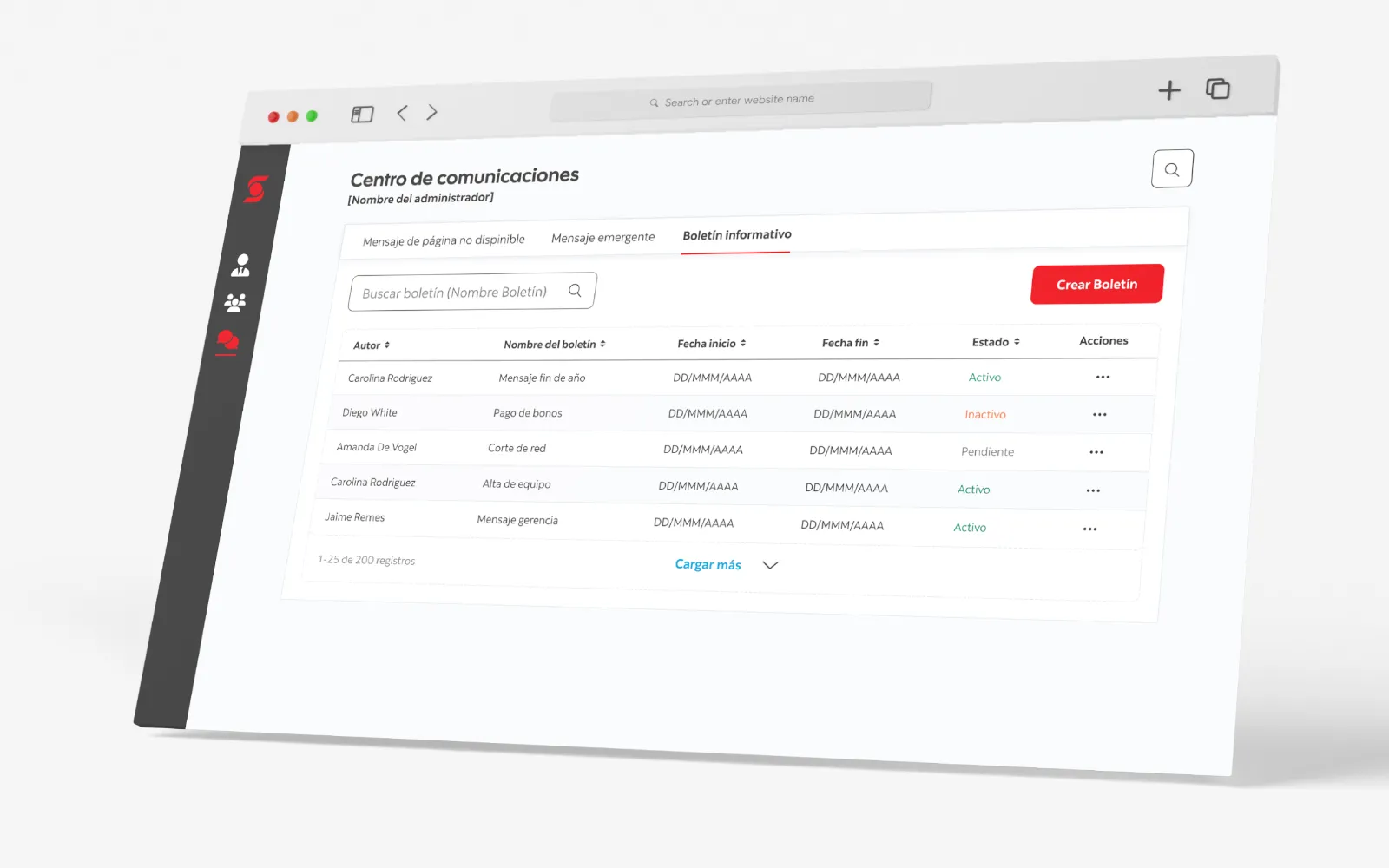
• Informative Newsletters — Designed for platform-wide communication and informational announcements.
• Pop-Up Messages — Designed for high-visibility communication scenarios requiring immediate visibility.
The system also reused Scotia Connect platform patterns and navigation structures to support consistency across products and reduce development fragmentation.
Core Flow
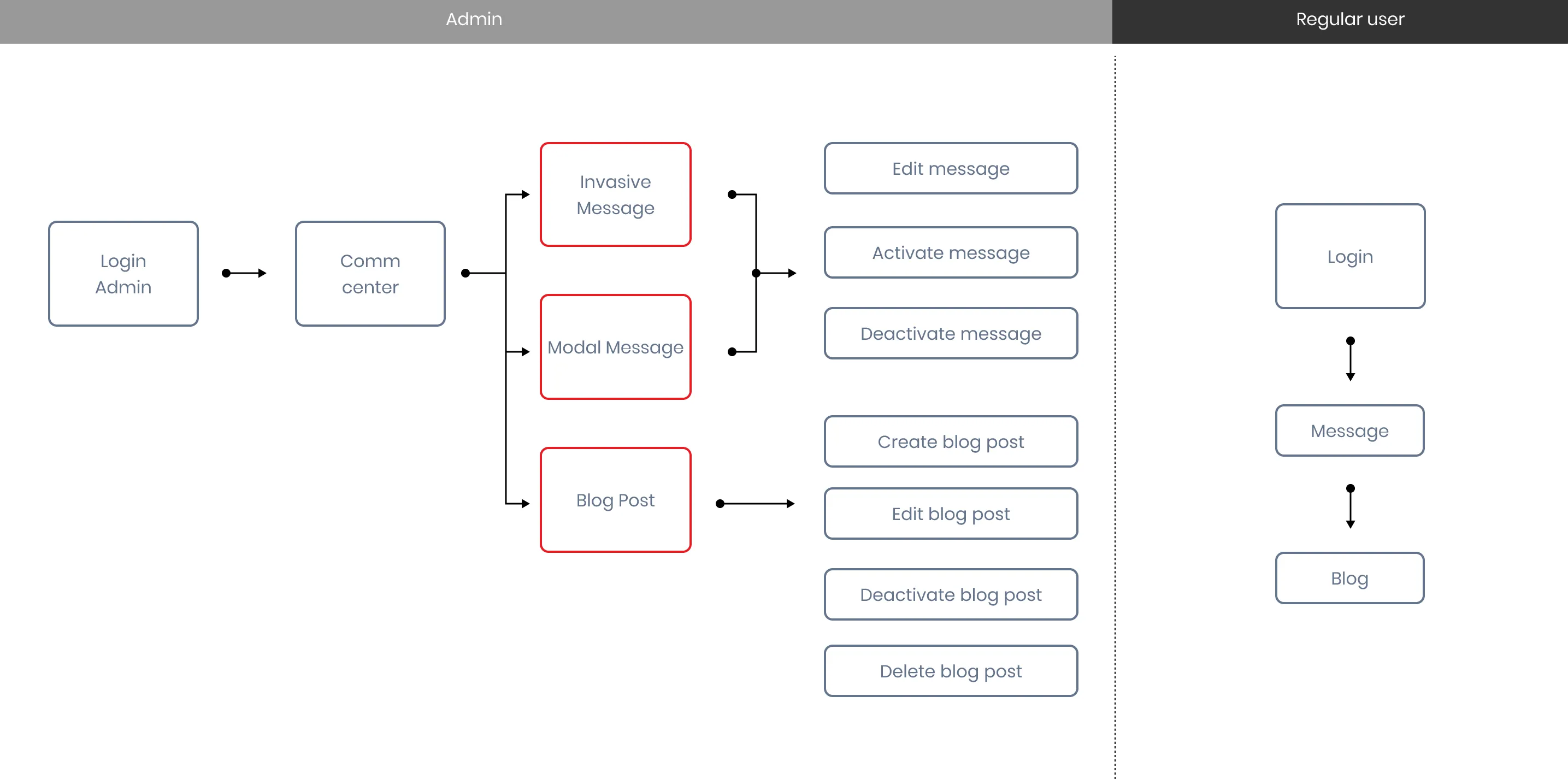
A centralized communication workflow was designed to support message creation, approval, activation, distribution, and lifecycle management. The system supported message creation, editing workflows, activation and deactivation states, approval flows, recipient visibility, administrative controls, blog and newsletter management, and intrusive message distribution.
Prototype
A functional prototype was created to document the end-to-end communication experience and support alignment between product, business, and development teams. The prototype included newsletter management, pop-up message workflows, administrative dashboards, role-based permissions, navigation systems, message states and controls, and recipient experiences.

Key Product Decisions
Structured Communication Roles
Defined clear responsibilities between creators, approvers,
administrators, and recipients.
Reusable Platform Patterns
Reused Scotia Connect navigation and interface structures to maintain consistency.
Multi-Channel Communication
Created separate communication environments for informative content and intrusive alerts.
Cross-Market
Scalability
Designed the system to support different regional requirements while maintaining a unified platform structure.
Outcome
The Communication Center gave Scotia Connect administrators one structured place to create, approve, and distribute platform-wide messages across markets — with clear roles, consistent patterns, and a foundation that scales as new channels are added.