Bill Payments — Enterprise Payment Operations for Mexico and Colombia
Designed a scalable enterprise payment experience that helps corporate banking users create, review, approve, and manage high-volume payment operations through a structured, operationally clear, and enterprise-focused workflow.
Project Context
Bill Payments was part of the Scotia Connect ecosystem, focused on helping enterprise and
commercial banking clients create, review, approve, and monitor payment operations across different
banking workflows.
The platform needed to support high-volume enterprise operations while maintaining clarity, reliability, compliance, and operational efficiency across multiple regions.
As part of the Product Design team, I collaborated with product owners, developers, business teams,
and regional stakeholders to improve usability, reduce operational friction, and modernize critical
payment experiences inside the platform.
Design Focus
The main design focus was simplifying operational complexity without removing the depth required for
enterprise banking workflows.
The redesign efforts focused on improving transaction visibility, simplifying operational flows, reducing cognitive overload, improving scanability, and supporting faster operational decision-making.
• Improving transaction visibility
• Reducing cognitive overload
• Improving scanability
• Supporting operational clarity
• Creating consistency across workflows
Problem to Solve
Enterprise payment systems naturally contain large amounts of operational complexity.
Users frequently manage multiple accounts, large transaction volumes, approval chains, multiple
currencies, payment methods, and compliance validations simultaneously.
• Reduce operational friction
• Improve navigation clarity
• Support faster decisions
• Improve payment visibility
• Create scalable enterprise workflows
Design Contribution
I helped shape the Bill Payments experience by turning a complex enterprise banking workflow into a clearer, more controlled, and more scalable product experience. My contribution focused on making payment operations easier to review, easier to understand, and easier to complete, while supporting the level of trust, structure, and precision required in a corporate banking platform.
Design Challenge
The main challenge was simplifying a high-stakes payment process without making it feel lightweight or incomplete. Users needed to manage critical transactions, approvals, validations, and payment statuses with confidence, so the experience had to reduce friction while still communicating security, accuracy, and operational control.
Core Flow
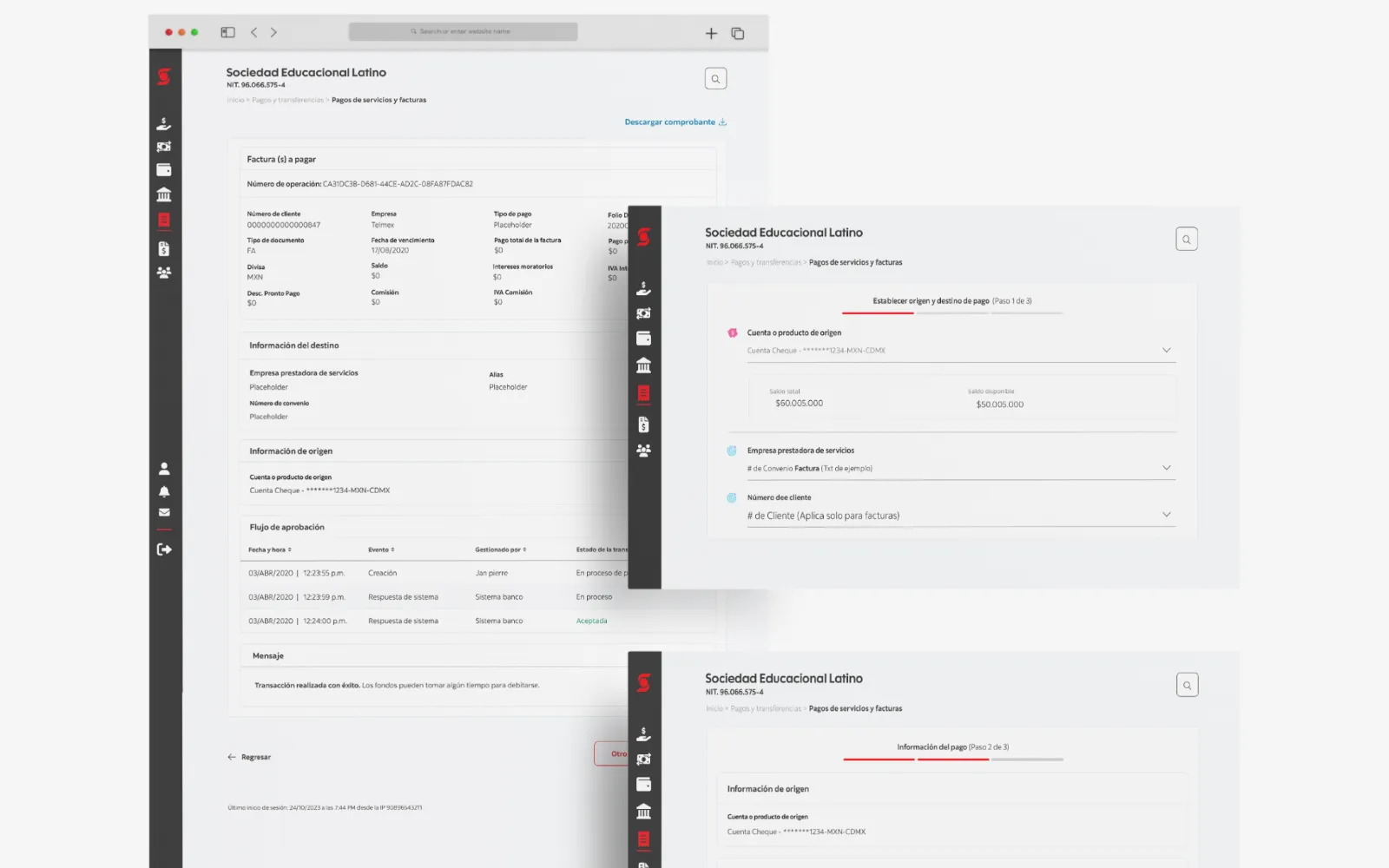
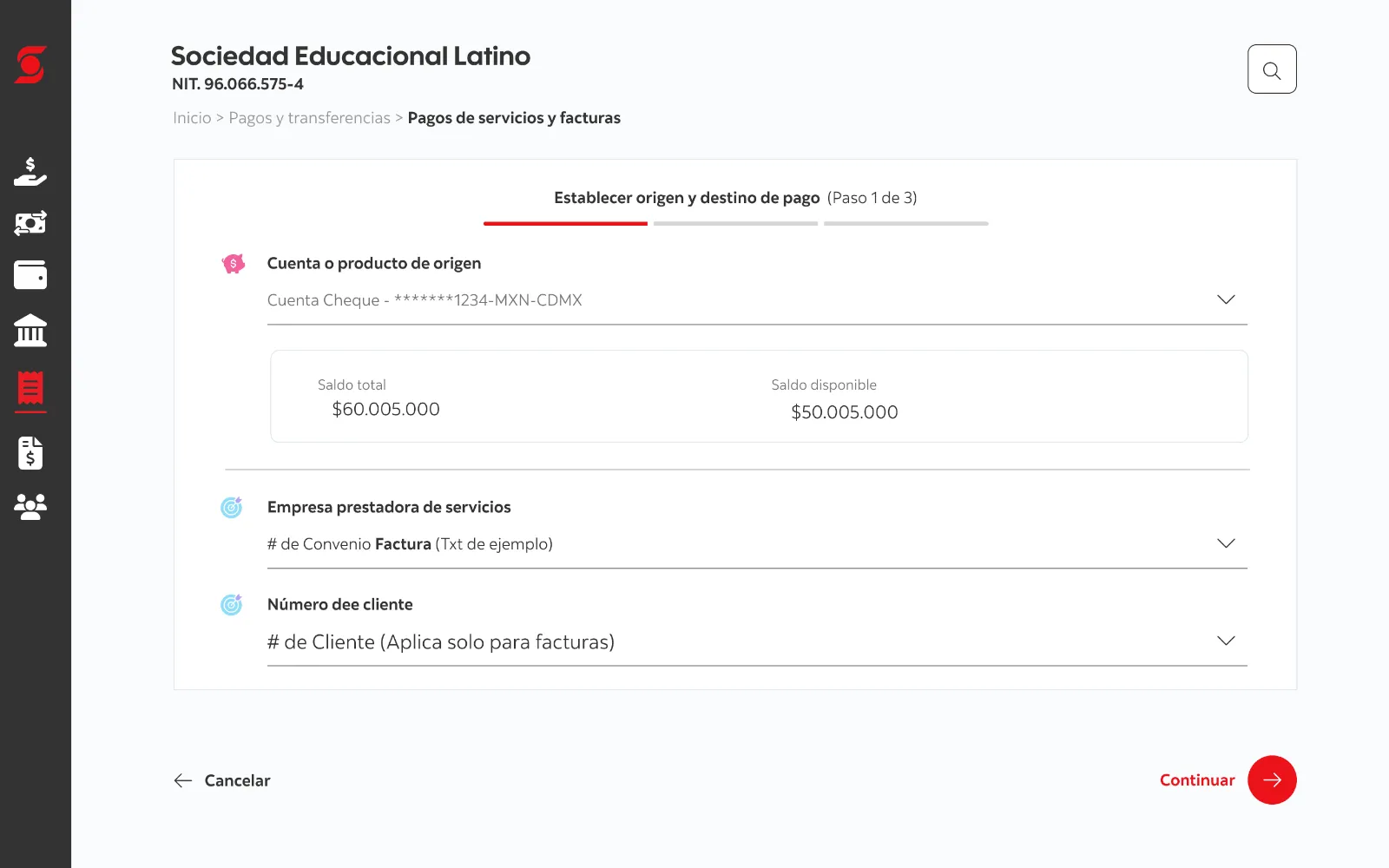
The Bill Payments experience focused on helping enterprise users create payments, validate transaction details, review operational information, manage approvals, monitor statuses, and complete high-volume payment operations more efficiently. The redesign approach prioritized operationalreadability, stronger hierarchy, clearer transaction states, and reduced workflow friction across enterprise banking operations.

Prototype
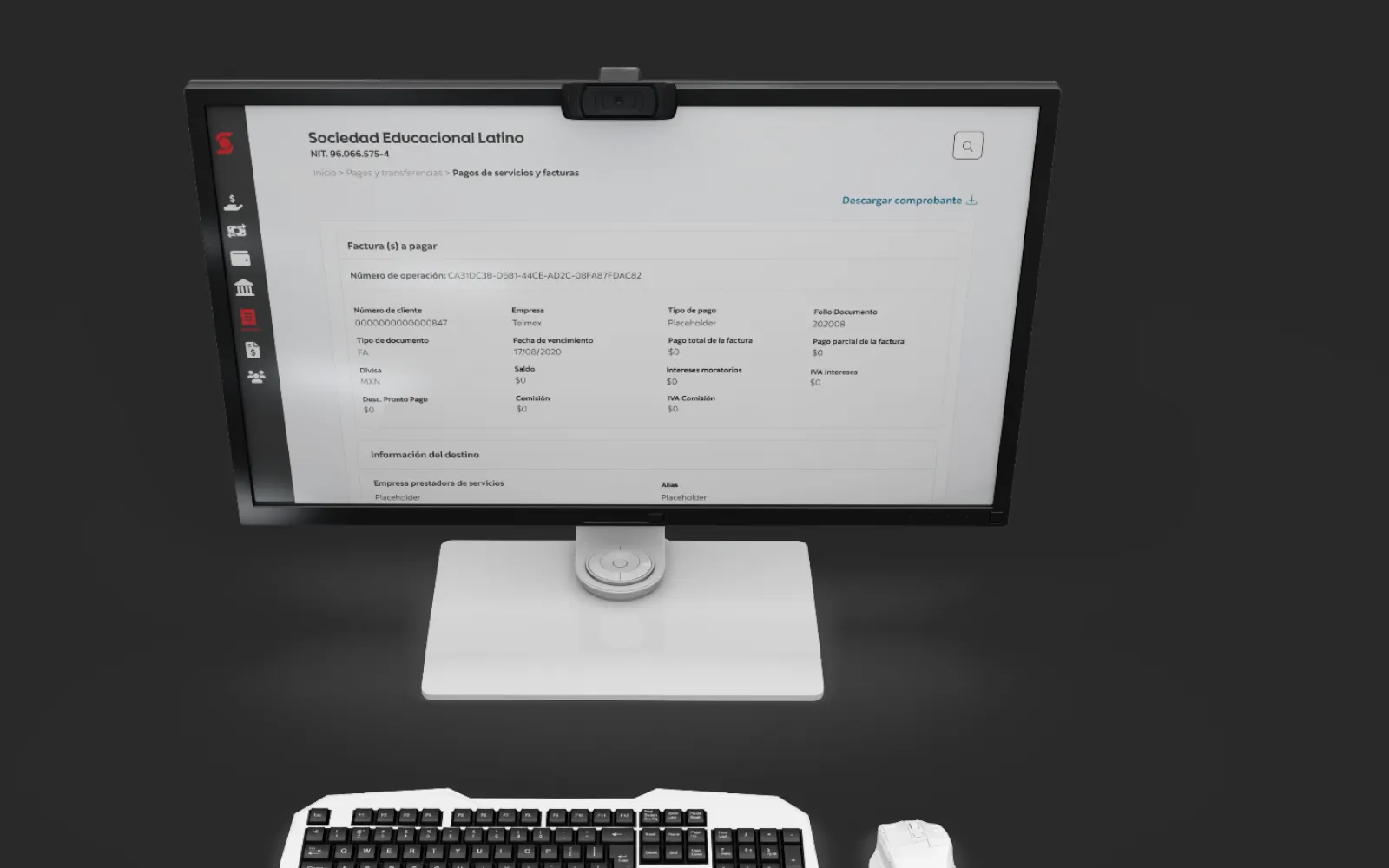
Prototype explorations focused on improving payment hierarchy, operational scanning, enterprise readability, approval visibility, and scalable interaction patterns inside Scotia Connect. The work explored cleaner enterprise layouts, more structured payment experiences, improved table readability, and clearer operational actions across the payment lifecycle.

Key Product Decisions
Payment Review First
Designed the flow around clear payment review moments so users could verify important information before continuing.
Status Visibility
Made payment states, approvals, validations, and pending actions easier to identify throughout the workflow.
Operational Control
Structured the experience to help users understand what needed attention, what was already processed, and what actions were still required.
Platform Consistency
Aligned the experience with Scotia Connect patterns so the workflow could scale across enterprise banking modules.
Outcome
The work gave corporate banking users clearer workflow steps, better transaction visibility, and more consistent approval flows across Scotia Connect payment operations in Mexico and Colombia — built on reusable patterns that scale with the platform.
Additional Impact
The project required collaboration between product teams, developers, business stakeholders, and
regional banking groups to align operational requirements with scalable product and UX solutions. The
work contributed to a broader effort focused on improving enterprise banking experiences through
clearer workflows, stronger usability, and scalable operational systems.